Service
Opener Repair & Installation in Fort Worth & the west metroplex
If the opener is dead and you need the car out, pull the red handle and lift the door by hand. That disconnects the motor and puts the door back on its springs. If the door is really heavy or will not stay up, stop. That is a spring problem, not an opener problem, and we will sort out which one you have in Fort Worth.
- Emergency and same-day repairs
- 5.0 from 10 reviews
- Upfront pricing, no hidden fees
- Free estimates
The opener is the weakest thing in the system
Half or three quarter horsepower moves a door the springs already balanced. It is not a lift. When the counterbalance drifts, the opener quietly eats the difference on every cycle. What breaks is whatever is in that force path: the plastic drive gear, the trolley, the arm, and the top panel where the arm bolts on. This is why the hand test comes before any opener diagnosis. A new opener on a heavy door is a repair with a countdown on it.
Chain, belt, screw, and wall mount
Chain drive is the most common and the toughest, and it is also the loudest. Its nylon worm gear is the classic wear part. Belt drive swaps the chain for a reinforced rubber belt and is a lot quieter, which matters when somebody sleeps over the garage. Screw drive runs the trolley along a threaded steel rod and needs that rod greased with its own specific lubricant, which almost nobody does, and then it binds. Wall mount jackshaft units drive the torsion shaft directly and clear the ceiling completely. Those are the answer for low headroom garages and for rooms above the garage.
Reading the fault off the behavior
Motor runs, door sits still: drive gear, broken chain or belt, or a trolley somebody left disconnected. Motor hums and does nothing: capacitor, or a seized motor. Nothing happens from remote or wall button: power, board, or wall control wire shorted by a staple. Door closes then reverses: sensors, close force, or close limit. Door opens partway and stops: open limit, or something adding resistance the force setting is reading as an obstruction. Door works but the light stays off and the unit beeps: on newer units that is usually a battery backup status message, not a fault at all.
Photo eyes cause more calls than anything else and take five minutes
Two sensors face each other across the opening, within six inches of the floor. One sends an infrared beam, the other receives it. Break the beam and a closing door reverses. They go out for boring reasons: a bike handlebar knocks a bracket, dust films the lens, a spider builds across it, or low winter sun comes straight through the open door and blinds the receiver. Most units show sensor status with a steady or blinking LED, and a blinking one means the pair cannot see each other. If a previous repair jumpered them out, that door has no working safety reverse at all.
Do not fix a reversing door by cranking up the force
Travel limits tell the opener where the floor is. Force settings tell it how much resistance is normal on the way there. When a door starts reversing off the floor, the easy fix is to turn the close force up until it stops. That works, and it also deletes the protection that would stop the door on a kid, a pet or a bumper, because the opener can no longer tell an obstruction from the resistance you told it to expect. The right order is: find the resistance, remove it, set force to the lowest number that runs the door, then test the reverse against something solid on the floor.
When a new opener is genuinely the better buy
Three cases. One, the unit is old enough that it has no photo eyes at all. Two, the board failed and it is discontinued or costs half a new opener. Three, the motor or gearbox went on a unit already past fifteen years, where everything else is at the same point in its life. Outside those three, repair usually wins on money. What a new unit does buy you is real: a DC motor with soft start and stop, battery backup that still works in an outage, rolling code security, and a belt drive that is dramatically quieter.
Signs you need this
- Motor runs the whole cycle and the door never moves.
- The unit hums, clicks, or trips the breaker instead of starting.
- Door starts down then goes back up, every time.
- Door stops a few inches off the floor and will not finish.
- Remote works up close but not from the driveway.
- A sensor light near the floor is blinking instead of steady.
- The opener got a lot louder, or the chain slaps the rail.
- Wall button works but no remotes do, or the other way around.
Book this service
Call (214) 831-2545 or request a visit online.
The visit
What we actually do
Door first
Trolley gets released and the door lifted by hand to make sure the springs are still doing their job. If the door is heavy, that gets fixed first, because otherwise any opener diagnosis is a guess.
Make it fail while we watch
We run the unit and watch the fault happen. Where in travel, what the motor does, what the lights and the sensor LEDs say. Intermittent problems get exercised, not assumed.
Test the parts
Drive gear, chain or belt, capacitor, motor, logic board, limit positions, force settings, wall control wiring, sensor alignment and power. Whatever the symptom points at gets checked, not swapped on a hunch.
Two numbers, your call
You get the repair price and the replacement price side by side, plus how old the unit is and what else on it is close to the end. Then you decide.
Set travel, force and safeties
Limits set to the door, force set to the lowest number that runs it reliably, remotes and keypads programmed, and both the photo eye reverse and the contact reverse tested before we leave.
On the job
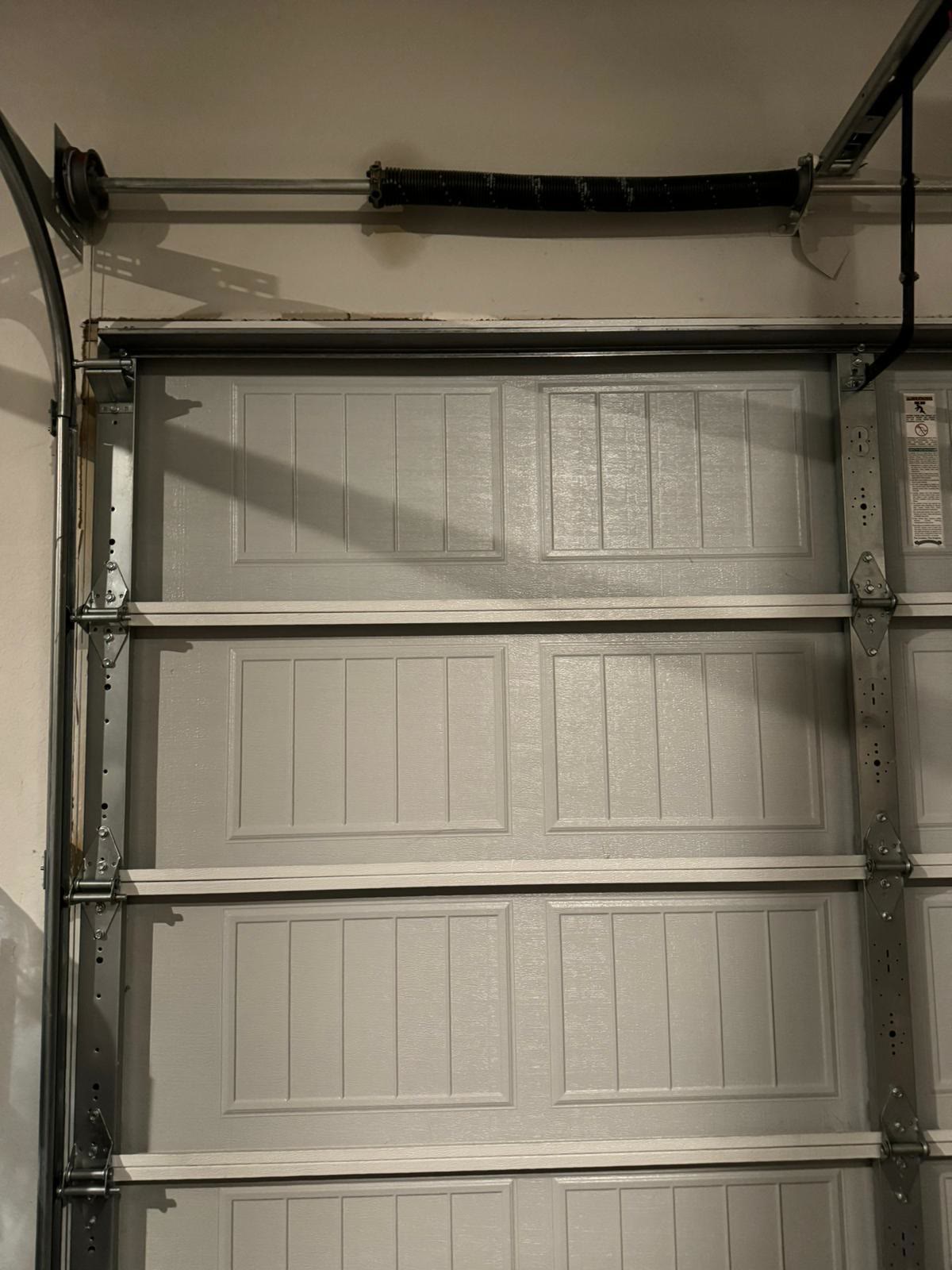
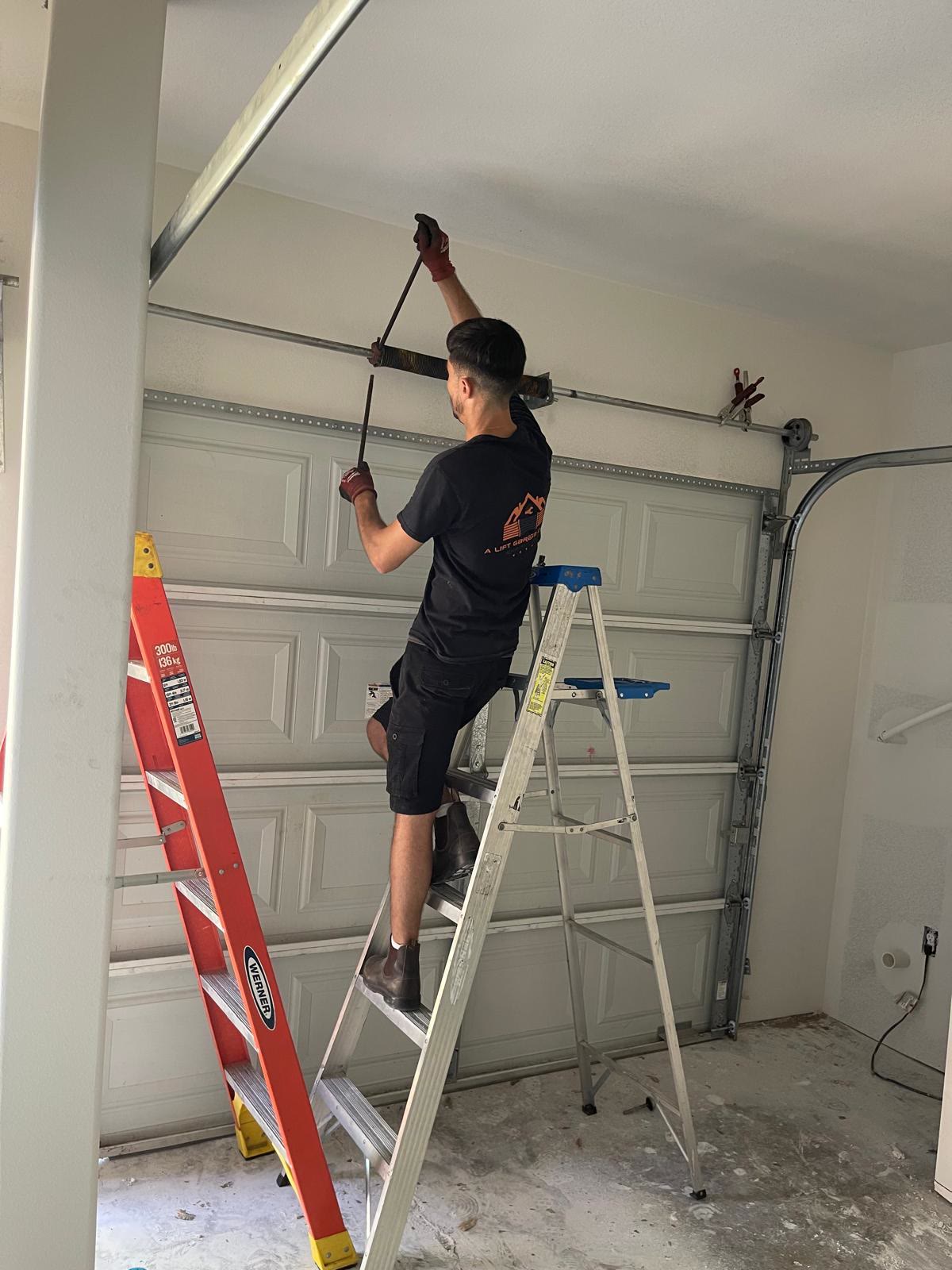
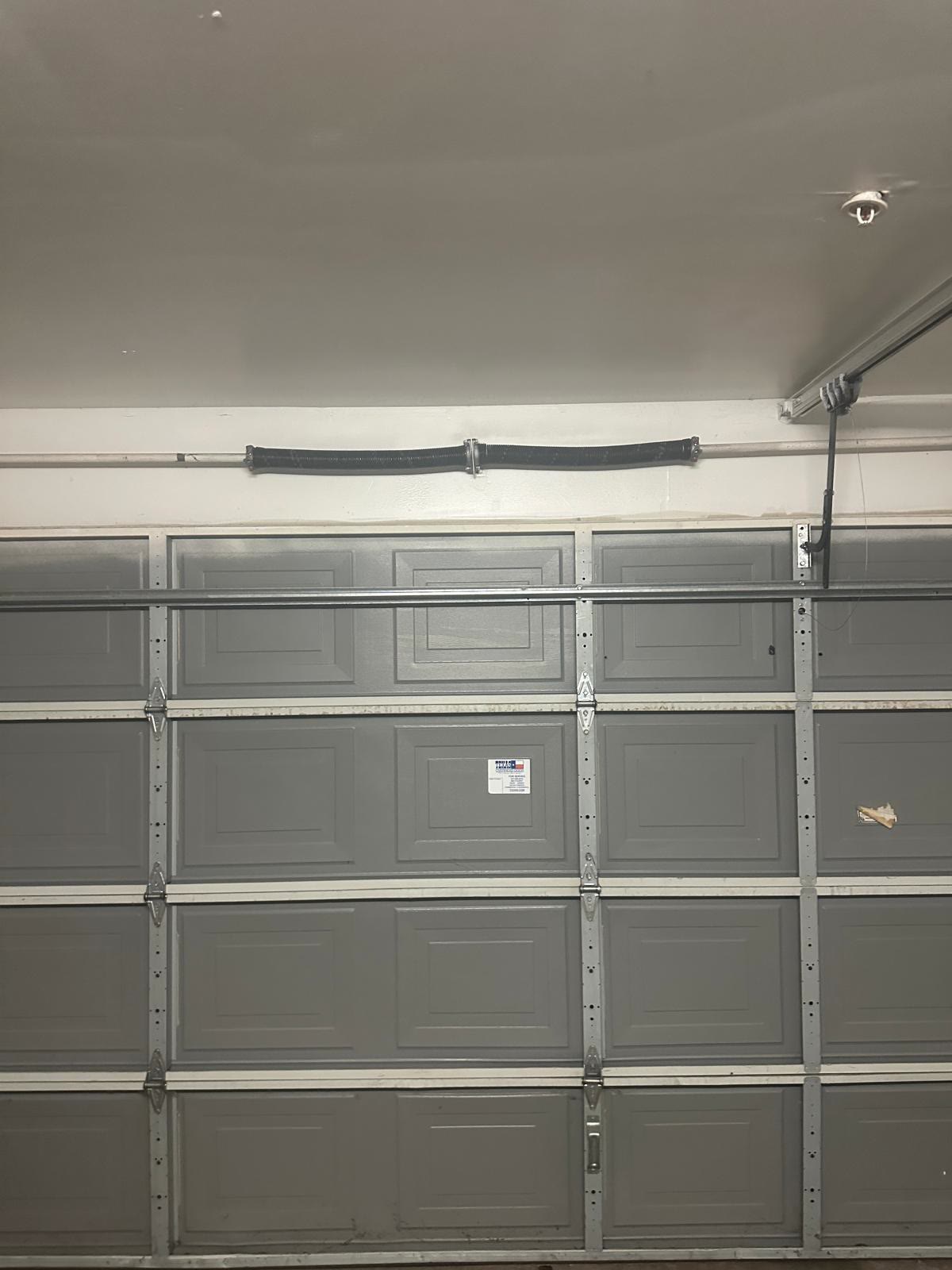
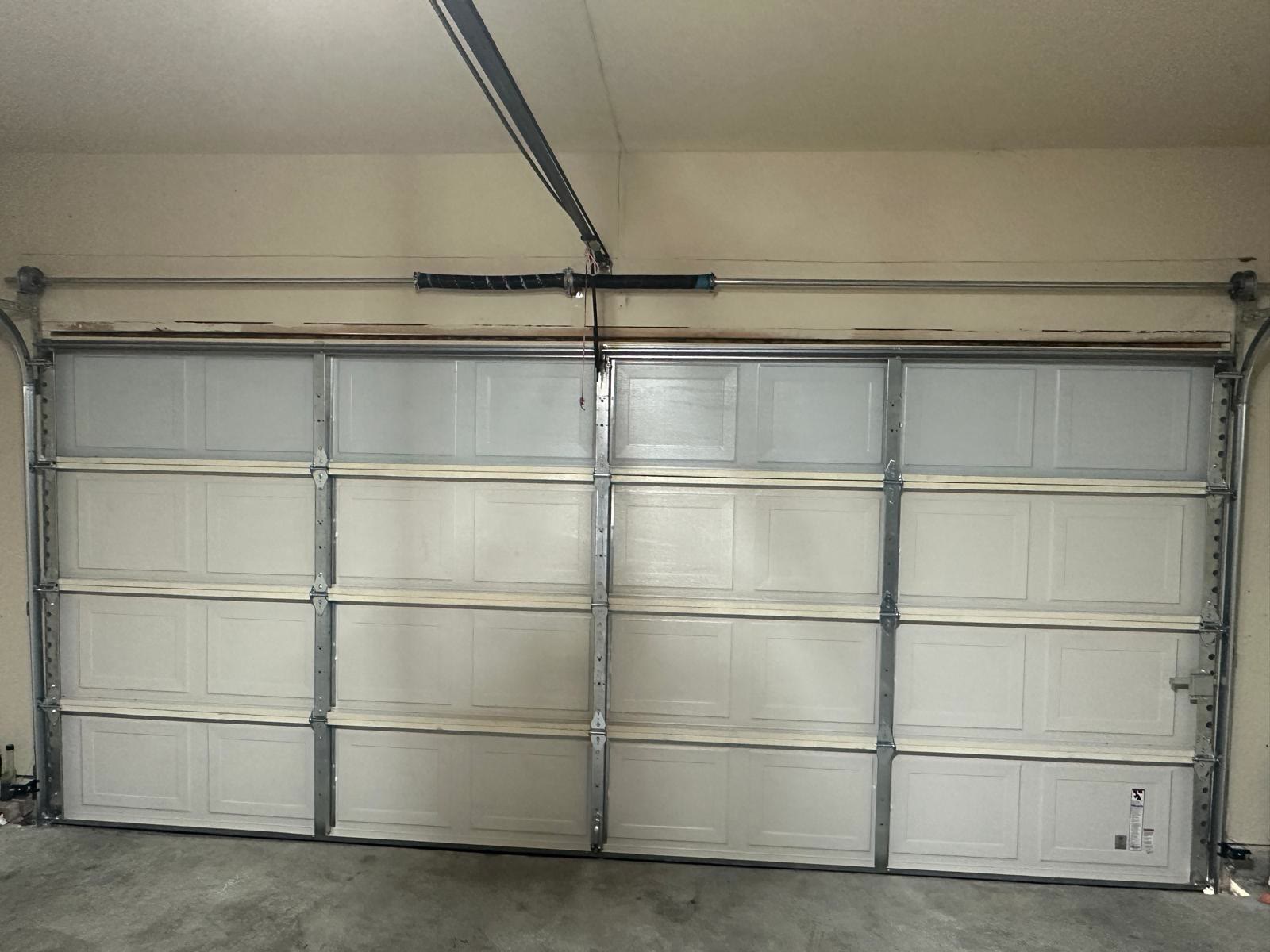
Opener Repair & Installation in the field
Questions
Opener Repair & Installation FAQs
The motor runs but the door does not move. What is that?
Nine times out of ten it is the drive gear, the nylon worm gear inside the motor head on a chain unit. Normal wear part, normal repair. It can also be a snapped chain or belt, or a trolley that got left disconnected after somebody pulled the red handle. None of those need a new opener.
Repair it or replace it?
Repair usually wins under about fifteen years old with a part available. Replace when the unit has no photo eyes, when the board is discontinued or costs half a new opener, or when the motor itself went on an already old unit. You get both numbers and the reasoning.
Door closes then opens right back up. Why?
Check the sensor lights first, since that costs nothing. Then the close limit, which may be set past the floor so the opener keeps pushing after the door has landed. Then anything adding resistance in the last foot, like a hardened bottom seal or a sticking roller.
My remote only works from a few feet away.
Usually not the opener. New battery first. If the range is still bad, the most common culprit is the LED bulb in the opener itself, which throws radio interference. Swapping to a bulb rated for garage door openers fixes a surprising number of these. After that, make sure the antenna wire hanging off the motor head is dangling free and not tucked up.
How long should an opener last?
Ten to fifteen years in a normal house. Drive gear and capacitor are the parts most likely to need attention before then. The thing that shortens it most is door balance, because an opener fighting weak springs is doing way more work per cycle than it was designed for.
Is battery backup worth paying for?
If the garage is your main way in and out, yes. Without it, an outage means pulling the handle and lifting the door by hand, which is easy on a balanced door and rough on a heavy one. Backup units also keep the safety sensors live through the outage.
Can I install an opener myself?
Yes, honestly. The instructions are decent and it is a reasonable weekend job. Two things. Check that the door balances by hand before you start, or the new unit will die early. And do not skip the photo eyes or mount them higher than six inches off the floor to make the wiring easier.
Can you clear the old owner's remotes?
Yes, and if you just bought the house you should. Holding the learn button on the motor head wipes every stored code, then we reprogram only your remotes and keypad. Takes a couple of minutes.
Where
Opener Repair & Installation near you
Book a visit that fits your day
Opener diagnosis and replacement, starting with the door itself, because an unbalanced door is what kills openers.