Cables & Tracks
Cables And Drums: The Parts That Fail Second
A garage door cable costs less than a tank of gas and holds up one corner of a two hundred pound door. It almost never fails without warning, and the warning takes two minutes to find.
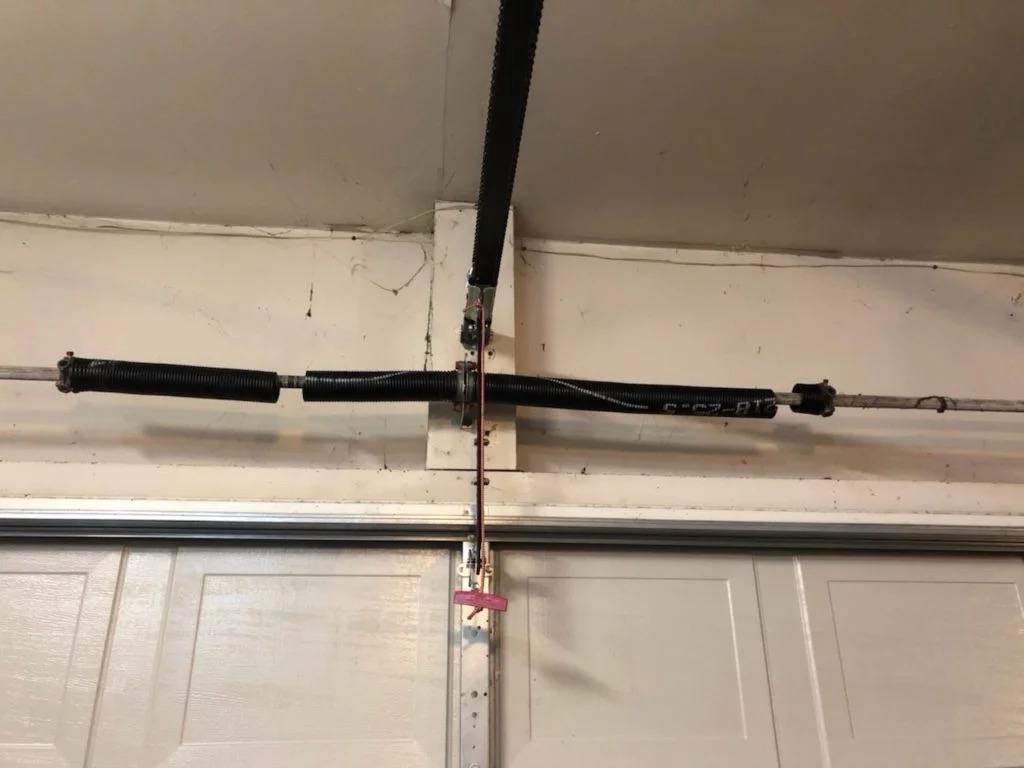
The short version
- Cables fray in two places, where they wrap the drum and where they loop through the bottom bracket, and a fuzzy spot is the warning.
- A cable under tension cannot leave its drum, so every jumped cable started with slack from an obstruction, an uneven slab or a broken spring.
- The bottom bracket holds full spring tension on a closed door, which makes the cheapest part on the door attach to the most dangerous bolt.
- Cable parts cost almost nothing and cable labor costs real money, so doing them during a spring job saves most of that labor.
A garage door cable is galvanized aircraft cable about an eighth of an inch thick. The part costs less than a tank of gas. It is also the only thing tying one bottom corner of a two hundred pound door to the drum that lifts it, and when one lets go, that corner comes down while the other side stays up.
Cables almost never fail without warning, and the warning is visible. You need a flashlight and two minutes. Springs fail first on a house door. Cables fail second. Here is where they go and how the assembly works.
The two places a cable frays, and almost nowhere else
Cables do not wear evenly. They wear at two points. The first is at the top, where the cable wraps the grooved drum on the end of the torsion shaft. That is a tight radius carrying the full load of that side of the door, every cycle, for years. The second is at the bottom corner, where the cable loops around the pin on the bottom bracket. Same reason. Tight bend, real weight.
You are looking for a fuzzy spot. Aircraft cable is small wires laid in a spiral, and when those wires break they spring outward and the cable grows a halo you can see and feel. Sometimes it is one wire standing off the lay, far enough to catch a rag. Sometimes it is rust bleeding out of the strand where water has been sitting. Any of that means the cable is on its way out. It does not heal.
- Close the door all the way and leave it closed. You are looking, not moving anything.
- Light up the top corner where the cable winds onto the drum. Study the cable at the drum and the six inches below it.
- Follow it down the wall and look at the loop through the bottom bracket.
- Do the same on the other side. The two cables wear at different rates.
- Check the slack. On a closed door both cables should be taut. One loose side means something already moved.
How the drum and the cable lift the door
Above the door is a steel shaft running the width of the opening, carried by a bearing plate at each end and a center bracket in the middle. The torsion spring sits on that shaft. Outside each bearing plate is a drum, a spool with a spiral groove machined into it, sized so the cable takes up at the right rate as the door climbs.
The cable runs from the drum down the inside of the jamb to the bottom bracket. The spring holds wound up torque. Release the door and that torque turns the shaft, both drums turn with it, and each drum winds its cable, pulling its corner up the track. The opener lifts nothing. It pushes and pulls a door the springs have already made nearly weightless. Nothing here holds the door by friction. It holds it by tension in a steel rope.
Why both cables and both drums have to be set the same
The drums are clamped to the shaft with set screws. If one sits a quarter turn ahead of the other, that side takes up faster and the door lifts crooked. The high corner leads, the low corner drags, rollers push into the flange of the track instead of running down the middle, and the hinges take side load they were never built for.
You can spot it on a badly repaired door. Closed it looks fine. On the way up, one top corner leads the other by an inch or two and the door makes the same noise at the same point every cycle. Left alone, the trailing cable goes slack at the bottom of travel, and slack cable is how cables come off drums. Setting drums equal is not eyeballing it, and the shaft carries spring torque any time the door is not fully open, so loosening a drum set screw on a closed door releases that side.
Why a cable jumps off the drum
A cable under tension cannot leave its groove. It physically cannot. So a jumped cable means something let it go slack for a moment, and that list is short.
- The door landed on something. A trash can, a bag of mulch, a bike wheel. That corner stops, the spring keeps unwinding, and the cable jumps the groove.
- The slab is not level. Clay moves slabs in North Texas and one end of the opening ends up higher. That end touches down first, the cable goes slack for the last inch, and it does that on every close until one day it comes off.
- A spring broke. No torque on the shaft means nothing keeping the cables wound.
- A roller seized or came out of the track, so the door hung up on that side while the drum kept turning.
- Somebody forced the door by hand, or tried to lift a door that already had a broken spring.
Once a cable is off the drum the door is off track by definition, because that corner has nothing holding it. Do not run the opener to see if it rewinds. It will pull the door up on the good side and drag the bad corner, and now you are paying for a bent track and a cracked section on top of a cable.
The other part called a safety cable, which is not this one
Doors with extension springs are built differently. Instead of a shaft and drums above the opening, they run a long spring stretched along each horizontal track. On those doors a safety cable is a plain cable threaded through the middle of each spring and anchored at both ends. It lifts nothing and carries no load in normal use.
Its only job is to catch the pieces when the spring snaps, because a loaded extension spring that breaks becomes a whip of steel crossing the garage at speed. Two different parts, one word. If somebody says your safety cables are missing and your door has a spring on a shaft above the opening, ask what they are looking at. Torsion doors do not have them and do not need them. If you do have springs stretched along the tracks with nothing running through them, that is a real hazard and the fix is cheap.
A cheap part with expensive labor attached
The cable itself is close to nothing. Almost the whole bill is labor. The door has to be secured so it cannot move, the shaft has to be brought under control, the drums have to be reset and indexed, and both cables get run and tensioned evenly before the door gets cycled and watched to confirm it lifts square. That sequence takes the same time whether one cable is bad or both.
That is why doing cables during a spring job saves you most of the money. The door is already secured and the shaft is already being handled, so adding a pair of cables is mostly the price of the cables. Coming back in six months means paying for the whole setup twice.
The other half of it: cables do not have to be replaced just because a spring broke. Clean, straight, no fuzz at either end, they are fine. Some shops swap them automatically on every spring job. That is not always wrong, because it is cheap while the door is apart, but it should be your call, and you should see the old cable.
What to tell us when you call
Three answers change how the visit runs. Which corner, top or bottom. Whether the cable is frayed, hanging slack, or completely off the drum. And whether the door is closed flat, open, or sitting crooked. A frayed cable on a closed door is a scheduled repair. A cable off the drum with the door hung part way is a door that has to be secured first.
The bottom bracket is the most dangerous bolt on the door
On a closed door, the bottom bracket at each corner holds full spring tension, delivered through the cable. It does not matter that the door is sitting still on the floor. The load is there the whole time. Loosening those bolts releases it instantly, hard enough to break bones and go through drywall. People have been killed by that bolt. Cable work also means handling drum set screws on a loaded shaft, which does the same thing. The part costs almost nothing, and that is exactly what makes it tempting.
Need this done?
We handle residential garage door across Fort Worth and the western metroplex. Call (214) 831-2545 or book online.
Questions
Common questions
How long do garage door cables last?
They are rated in cycles, not years, and they usually outlast the first set of springs. On a door that runs a few times a day, eight to fifteen years is normal. Humidity shortens it, so homes around Eagle Mountain Lake, Grapevine Lake and the Brazos communities in Hood and Parker counties tend to see rust at the bottom loop years earlier than a dry inland garage.
Can I keep using the door if a cable is frayed but not broken?
No. A fraying cable is losing strands and every cycle takes more of them. Park outside, leave the door closed, and get it replaced. The failure mode is one corner dropping while the other stays up, which puts the door out of track and bends hardware on the way down.
Do both cables get replaced, or just the bad one?
Both, every time. They are the same age, they have run the same cycles, and they have to be equal length under equal tension for the door to lift square. Replacing one leaves you with a mismatched pair and means paying the same labor again in a few months.
The cable came off the drum. Can I wind it back on?
No, and not because it looks hard. Getting the cable back in the groove means taking load off that corner, which means dealing with a shaft under spring torque and a bottom bracket under full tension. Those are the two parts on the door that injure people. Leave it closed and untouched.
Why did a new cable fray again within a year?
A cable that wears out fast is a symptom, not the problem. Usually the drum is worn or grooved, the drums are not indexed the same, the bottom bracket is bent, or the door runs out of square because the slab shifted. Replacing the cable again without finding that gets you the same result on the same schedule.
More advice
Keep reading
What Puts A Garage Door Off Track, And What To Do In The First Minute
A derailed garage door is not resting on anything. It is hanging off whatever is still hooked. What you do in the first minute decides whether this is a roller or a new section.
Buying GuideChoosing A New Garage Door Without Getting Talked Into One
Two garage doors can look identical in a driveway and be a long way apart in what they are made of. Here is what actually drives the number on a quote, and how to compare two of them honestly.
SpringsHow Long Garage Door Springs Last, Counted In Cycles Not Years
One cycle is one trip up and one trip down, and a standard spring is rated around 10,000 of them. Divide by how often your door runs and you have your answer, plus what makes the real number come in lower.