Buying Guide
Steel, Wood Or Composite: What Survives North Texas
For most houses on this side of the metroplex the answer is insulated steel, and we will say why in one paragraph before explaining anything. Then the honest case for and against every other material.
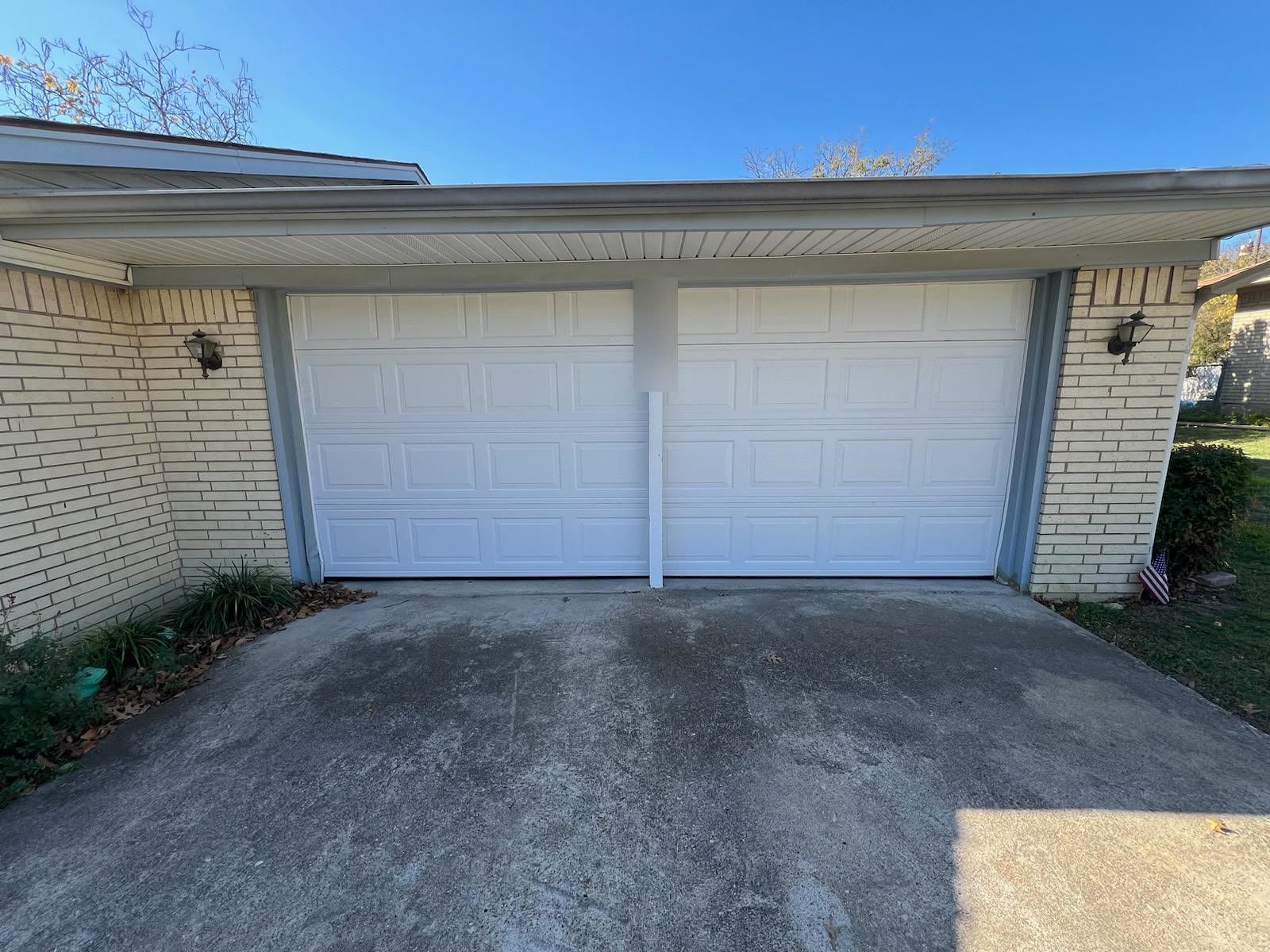
The short version
- Steel gauge runs backwards, so 24 gauge is thicker than 25 or 27, and a bonded three layer sandwich panel is the version that handles both hail and the opener's twisting force.
- Wood looks like nothing else and is worth it to the right owner, but sun and humidity swings set the refinishing schedule here and the weight drives both spring sizing and opener class.
- Cosmetic hail dimples do not require replacement, a creased section does, and a door more than about ten or twelve years old often has panels that are out of production.
- Painted doors fade unevenly by orientation, so a single factory color replacement panel will not match a sun aged door, which is why a primed paintable door is the answer when an exact match matters.
For most houses out here the answer is insulated steel, specifically a three layer sandwich panel. You should know the recommendation before you read the arguments for everything else.
The reason is short. Steel handles hail better than anything near its price, a bonded three layer panel resists the twisting an opener applies thousands of times, and it asks nothing of you except a wash and a lubrication twice a year. Wood asks for maintenance in this climate and gets heavy. Full view aluminum and glass look good and let heat in. Composite splits the difference and its quality range is wide enough to matter. Everything below is the detail behind those four sentences, because the right answer for your house might still be one of the others.
Steel, where gauge runs backwards and layers matter more
Gauge is a measure of steel thickness and the scale is inverted. 24 gauge is thicker than 25, which is thicker than 27. Entry level doors are usually 27 or 25. The step to 24 is real metal, and you can feel the difference by pressing a thumb into the flat of a panel in a showroom.
Thin steel dents. Somewhere else in the country that would be a cosmetic footnote. Here it is the hail conversation, and it is the single biggest reason to spend up on gauge rather than on window inserts.
Layers do more than gauge alone, though. A single layer door is a sheet of steel with nothing behind it. A three layer sandwich bonds a second skin behind the insulation, and the panel then behaves like a beam. It shrugs off the opener's twisting force and it takes an impact without folding the whole section. If you only spend up on one thing on a steel door, spend it on layer count.
Wood looks like nothing else, and it asks for something back
Real wood is not a nostalgia purchase. A cedar or hemlock carriage house door on the right house looks like nothing a stamped steel panel can imitate, and to the person who wants that look it is worth the money. We are not going to talk anybody out of it.
Here is the honest side. Texas sun and heat cycling are hard on a finish, and a south or west facing wood door here wants refinishing on a schedule that is shorter than the showroom photo suggests. Humidity swings move the wood, so panels expand and contract through the year and joints work against each other. Stay on top of it and you are cleaning and recoating. Let it go for a few seasons and you are stripping and starting over.
Wood is also heavy, and weight has consequences you do not see on the display floor. It drives spring sizing, and it often drives opener class, so the same size wood door can need a heavier duty operator than a steel one. None of that is a reason to avoid wood. It is a reason to buy it because you want wood, not because you expect it to behave like steel.
Composite and wood look overlay, where quality varies most
Composite and overlay doors give you the wood look on a base that does not behave like wood. Usually a steel or fiberglass core with a molded or applied composite face, sometimes real overlay boards fixed to a steel door.
Done well, this is a good answer for a house that wants carriage house looks without the refinishing schedule. Done cheaply it is not, and the honest caveat is that quality varies more in this category than in any other. Low end composite faces and printed woodgrain finishes chalk and fade under this sun, and once a printed finish has faded there is nothing to refinish back to.
So ask two specific questions. How is the face attached and what is it made of. And what does the finish warranty say about fade, in writing, rather than what the salesperson says about it.
Full view aluminum and fiberglass
Full view doors are aluminum frames holding glass panels, clear, frosted or tinted. They are genuinely good looking, they are popular on modern houses and on shops where somebody wants daylight, and there is nothing wrong with them.
Three honest facts go with them. They are lighter than an insulated steel door, which makes the counterbalance math different rather than easier. They let heat in, and on a west facing opening that is significant, though tinted or insulated glass units help. And they generally cost more than a comparable steel door for the same opening.
Fiberglass has a narrower place here. It takes a woodgrain finish well and it will never rust, which is a real advantage in a humid spot. But years of direct sun make it more brittle, and where steel dents under hail, fiberglass is more likely to crack. Cracked is a replacement. Dented is a decision.
Hail is the tiebreaker on this side of the country
This is where North Texas genuinely differs from anywhere else, so it earns its own section.
There are two kinds of hail damage on a door and they are not treated the same way.
- Round dimples across the flat of a panel are cosmetic. The door still runs, the hardware is unaffected, and there is no mechanical reason to replace it.
- A crease across a section, or a bent top section where the opener arm attaches, is structural. A creased section no longer runs true in the track and it has to come out.
- Bent track or a bent end stile from the same storm is its own repair, and it wants fixing before it chews through rollers.
The part that catches people is panel availability. Manufacturers retire stamped designs and change embossing patterns, so a door that is more than about ten or twelve years old often has a section that is simply out of production. When the matching panel no longer exists, a single damaged section turns into a whole door conversation. And by the third damaged section on an older door, the parts and labor are approaching what a new door costs anyway.
Ask what happens in year eight
Before you buy, ask how long the manufacturer typically keeps a panel design in production and whether individual sections can be ordered for it. A door you can still buy one section for is worth something the day a storm comes through, and it is not a question anybody at a showroom expects.
The consequences nobody mentions at the showroom
Three practical things follow from material choice, and none of them are printed on the display card.
- Heavier doors need bigger springs and a stronger opener. Wood and heavy overlay doors are the usual case, and the counterbalance has to be specced to the finished weight rather than to the size of the opening.
- Painted steel fades unevenly depending on which way it faces. A door that has taken west sun for eight years is not the color that left the factory, so a single replacement panel ordered in the original factory color will not match the sections beside it.
- If an exact match to your trim or your house color matters, buy a primed paintable door and finish it on site. Factory colors and hand mixed paint almost never land in the same place, and matching afterward is harder than matching at the start.
None of that changes the recommendation at the top. It changes what you ask about before you sign, which is the whole point of reading something like this.
Do not touch the springs when you swap a heavier door in
Changing materials changes weight, and changing weight means the counterbalance has to be reset. That work happens with winding bars by somebody who does it regularly. Never wind, unwind or adjust a torsion spring, never loosen a bottom bracket, and never handle a cable while the door is up. Those parts hold the entire weight of the door and they release all of it at once.
Need this done?
We handle new garage door installation across Fort Worth and the western metroplex. Call (214) 831-2545 or book online.
Questions
Common questions
What gauge steel should I buy?
Remember the scale runs backwards, so 24 gauge is thicker than 25 or 27. Entry level doors are usually 27 or 25 and they dent easily, which matters here because of hail. If you have to choose between spending on gauge and spending on window inserts, spend it on the steel.
How much maintenance does a wood door really need in this climate?
More than most people expect, and the sun exposure sets the interval rather than the calendar. A south or west facing wood door needs cleaning and recoating on a regular schedule, because heat cycling and humidity swings work the finish and the joints. Skip it for several seasons and the job goes from recoating to stripping.
My door has hail dents. Do I have to replace it?
Not for round dimples in the flat of the panel. Those are cosmetic and the door runs the same as it did the day before the storm. What does need replacing is a section with a crease across it, or a top section bent where the opener arm attaches, because a creased section will not run true in the track.
Can I just replace the one damaged panel?
Sometimes, and it depends on the age of the door. Manufacturers retire stamped designs, so a door more than about ten or twelve years old often has a section that is out of production. Even when the panel is available, a factory color section will not match sun aged panels beside it, so a full repaint or a full door is sometimes the more honest answer.
Are full view glass doors practical in a Texas summer?
They work, but understand what you are buying. Glass lets heat in, and on a west facing opening that is a real load in the afternoon, though tinted or insulated units reduce it. They are also lighter than an insulated steel door, so the springs get specced to that lighter weight, and they usually cost more for the same opening.
Is composite a good middle ground?
It can be an excellent one, and it can be poor, which is why it needs more questions than the other materials. A quality composite or overlay gives carriage house looks without a refinishing schedule. A cheap one uses a printed or thin molded face that chalks and fades in this sun with nothing underneath to refinish.
More advice
Keep reading
Choosing A New Garage Door Without Getting Talked Into One
Two garage doors can look identical in a driveway and be a long way apart in what they are made of. Here is what actually drives the number on a quote, and how to compare two of them honestly.
Buying GuideGarage Door Insulation, Honestly Explained For A Texas Summer
Whether an insulated door pays depends entirely on what is above the garage and what is beside it. Here is the honest version, including the retrofit kits and what they do to your springs.
Buying GuideWhat Not To Overpay For On A Garage Door Repair
Openers replaced over a stripped gear, whole doors sold over one dented panel, new track that only needed adjusting. Here is the item by item breakdown, including the upgrades that really are worth the money.