Maintenance
What A $79 To $99 Tune-Up Actually Covers
A tune-up is the easiest service in this trade to sell as a vague good deed. Here is exactly what $79 to $99 changes on your door, and who does not need one at all.
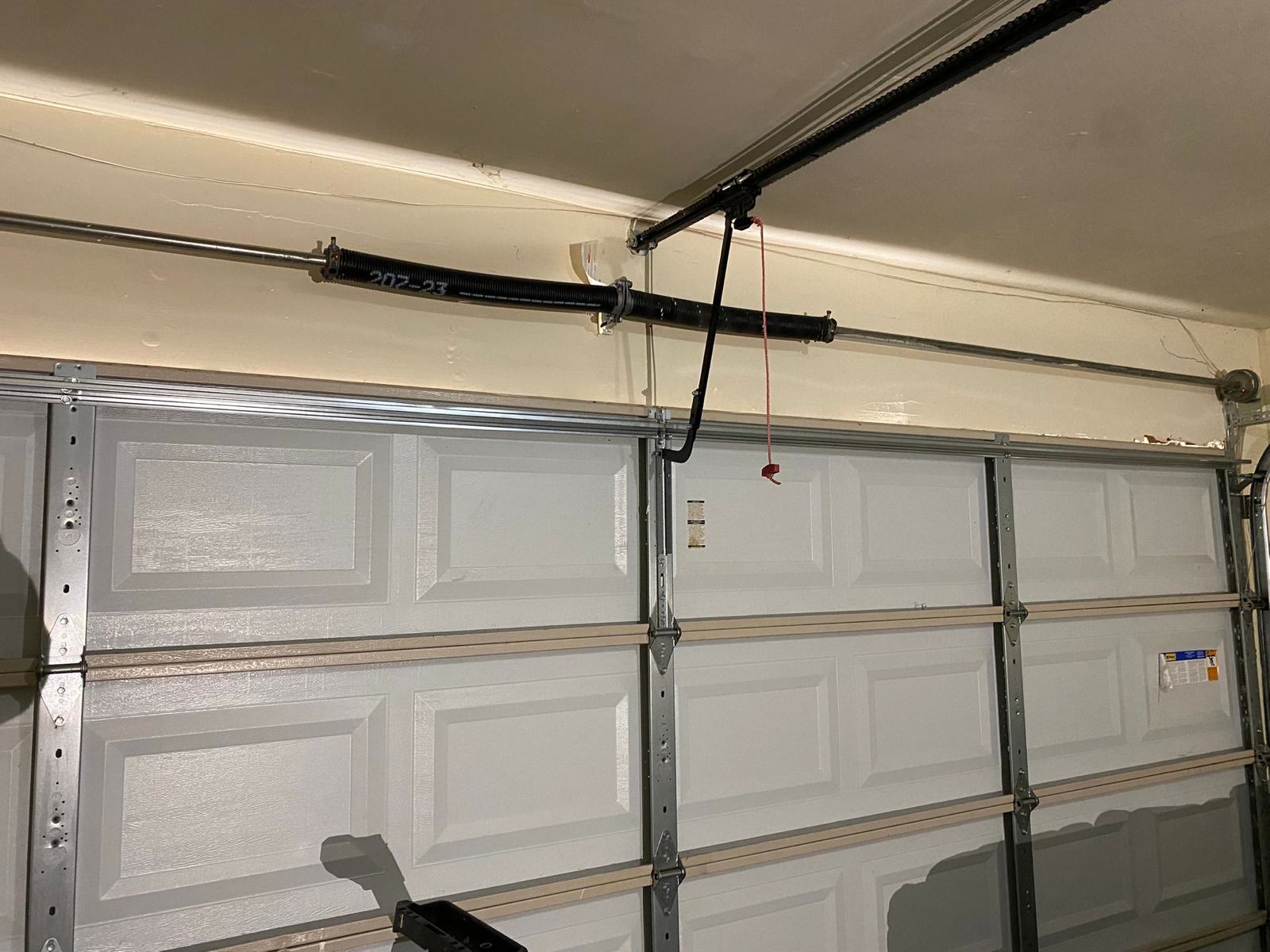
The short version
- The tune-up changes four things: spring tension corrected for balance, bolts torqued down, the right parts lubricated, and the opener travel and force reset.
- Balance is the point, because a door out of balance never announces itself and shows up later as a stripped drive gear or a cracked top section.
- The $79 to $99 is labor only, and any parts get quoted separately and approved before they go on.
- A three year old door that runs quiet and passes both safety tests does not need one, and hearing that on site is a legitimate outcome.
$79 to $99. That is one visit on a standard residential door. No trip fee stacked on top and no coupon math afterward. Where it lands in that range depends on the door and what the visit turns up.
Here is what that buys, because a tune-up is the easiest service in this trade to sell as a vague good deed. Four things actually get changed on your door. Everything else is inspection, which is worth real money on a machine that stores enough energy to lift two hundred pounds, but is not the same as work.
The four things that actually get changed
Everything below this list is looking, measuring and testing. These four are the only things that come out different than they went in.
- Spring tension corrected so the door balances, meaning it holds where it is left at waist height and takes about ten pounds of hand effort.
- Bolts torqued back down across the door. Hinges, track brackets, bearing plates, drum set screws, the header bracket and the ceiling hangers.
- The right parts lubricated with the right product. Spring coils, end and center bearings, hinge pivots and roller stems. Tracks wiped clean and left dry.
- Opener travel and force reset to how the door behaves now, not how it behaved the day it was installed.
If a tune-up you paid for somewhere else did not include correcting the balance, you bought a lubrication and a look.
The visit in order, and what each step is looking for
It starts with the opener disconnected and the door lifted by hand, before anything gets touched and before anything gets priced. That one motion tells us where the door drifts, whether it is heavy from the first inch, and whether it grabs at a point in travel, which separates a spring problem from a roller problem in about ten seconds. The springs get checked for gaps, rust pitting and uneven coil spacing, and the wire size and length get written down for the record.
Then a hardware pass from the bottom of the door to the top. Every hinge, roller, track bracket, bearing plate and drum set screw gets checked for torque and wear, and the cables get inspected at the two places they fail. After that comes lubrication, then the balance correction, then the opener. The order matters. Setting opener force before correcting balance just teaches the opener to fight a door that is about to change.
Balance is the whole point of the visit
A door twenty or thirty pounds out of balance does not announce itself. It opens. It closes. Nothing squeals and nothing catches. The opener quietly absorbs the difference on every cycle, which is exactly why nobody calls about it until something else breaks.
What absorbs it is the plastic drive gear in the motor head, the trolley, the arm, and the top section where that arm is bolted on. A door that arrives with a stripped drive gear or a cracked top panel has usually been out of balance for about a year, so the failure people call about is the second failure, not the first. The springs have also been working outside the range they were sized for that whole time.
Correcting it means adding or removing spring turns with winding bars against a loaded shaft. Ten minutes, and the most valuable ten minutes of the visit, because it is the only step that changes what every other part of the door has to endure.
The safety tests are the part that matters most
Two independent systems stop a closing door. Photo eyes within six inches of the floor reverse it when the beam breaks. The opener's own force sensing reverses it when the door meets resistance. Either can fail while the other still works, so both get tested separately, the beam broken mid travel and the force system checked against something solid on the floor.
One failure is worth naming. As a door gets stiffer with age, people turn the closing force up so it will seat, and every turn of that dial makes the contact reverse less sensitive. By the time a heavy door closes reliably, the force is often high enough to push through something soft. Resetting force after correcting balance puts that back where it belongs. If either system fails you hear about it before anything else.
What the inspection catches early, and what it saves
None of the following strands your car the day it is found. All of it is cheaper on that day than on the day it lets go, and that gap is the actual argument for the visit.
- Fuzzy strands where the cable wraps the drum. Found early it is a pair of cables at your convenience. Found late it is a cable, one corner of the door on the floor, and usually a bent track.
- Bearings gone gray and gritty. The bearing is a small part. A bearing that seizes scores the torsion shaft, and the shaft is not a small part.
- Rust pits in a spring coil. Pits are where fatigue cracks start, so a pitted spring will not reach its cycle rating. Knowing that means you choose when it comes out.
- Hinge bolt holes stretched into ovals. Replaced, it is a hinge. Ignored, the section sags, the roller stem cocks in the track, and the door comes off track.
- Rollers with play at the stem or a flat spot on the wheel. Replaced, it is a roller. Ignored, it is why the door is loud, and later why a wheel climbs out.
That list comes back ranked three ways: needs doing now, can wait a season, and just so you know. The ranking is the useful part. A list of every imperfect thing on a fifteen year old door is not information, it is a sales document.
What the price does not include
Parts. The $79 to $99 is labor for the visit. If the door needs a cable, a roller set, a hinge, a bearing or a spring, that gets quoted separately as a full number for parts and labor, and it goes on only after you say go. Nothing gets replaced first and explained afterward.
Also outside it: opener replacement, panel replacement, new door installation, and track repair beyond adjustment and tightening. Commercial and oversized doors are quoted separately, because a fourteen foot roll-up on a shop building in Parker County is a different piece of equipment with different hardware.
Who does not need one, and when it is worth booking
A three year old door that runs quiet, balances right and passes both safety tests does not need a tune-up. The hardware has not accumulated enough cycles for anything to move and the opener settings still match the door. We will say that on site and leave rather than write up findings to justify the trip. That happens regularly on newer doors in the Alliance corridor and the Aledo build-outs.
It is worth booking annually once the door runs four or more times a day, which is most families using the garage as the front door and works out to roughly fourteen hundred cycles a year. Every two years is enough for lighter use. Annually regardless if the door faces west, if the garage opens onto a gravel drive, or if the house has had slab movement, because a frame racked out of square loads one side unevenly on every cycle.
On timing, the end of summer is the right window in North Texas. A garage here runs well past a hundred degrees for months, and that heat thins the grease out of the bearings, hardens the bottom seal, and shortens the life of the opener's logic board and battery backup. An end of summer pass replaces what the heat took, before the first cold snap when springs stiffen and every marginal door in the county breaks on the same morning.
Finding nothing is a legitimate result
If the visit ends with the door balanced, the hardware tight, the cables clean and both safety systems passing, that is the report. It still costs $79 to $99, because the visit is the product and the balance check, the bolt pass and the lubrication happened either way. What will not happen is a finding getting invented so the invoice feels earned.
A door that fails a reverse test should be out of service
If the photo eyes do not reverse the door when the beam is broken, or the door does not reverse within about two seconds of hitting a solid object on the floor, stop using the opener for anything except moving the cars out. Both systems exist because closing garage doors have killed children and pets. Do not work around it by turning the closing force up so the door seats better, because that makes the contact reverse less sensitive, not more.
Need this done?
We handle garage door maintenance & tune-up across Fort Worth and the western metroplex. Call (214) 831-2545 or book online.
Questions
Common questions
What exactly does the $79 to $99 cover?
One visit on a standard residential door, including the balance correction, a full hardware torque pass, lubrication of the correct parts, an opener travel and force reset, and both safety tests. Parts are not included. Where it lands in the range depends on the door, and any parts get quoted separately for your approval.
How often should a door be tuned up?
Once a year if it runs four or more times a day, which describes most households using the garage as the main entrance. Every two years is fine for lighter use. Go annually regardless if the door faces west, if the garage sits on a dusty or gravel drive, or if the slab has moved, because all three load the hardware unevenly.
Will you find a list of problems and quote me a fortune?
You get a list ranked three ways: needs doing now, can wait a season, and just so you know. Anything in the first group gets a full number for parts and labor before it goes on. If nothing needs replacing, the tune-up gets finished and the visit still costs $79 to $99, because the work in it happened regardless.
My door works fine. Am I wasting the money?
On a door under about three years old that runs quiet and balances right, mostly yes, and that will get said on site. The value shows up once the hardware has real cycles on it, and it is highest when the door is already telling you something: a new noise, a hesitation, a drift on the hand test, or a seal that no longer meets the floor evenly.
Does a tune-up make my springs last longer?
It helps at the margins and does not change the fundamentals. A spring is rated in cycles and it spends them whether anyone greases it or not. What correct balance and lubrication prevent are the things that end a spring early: coil on coil friction, rust pitting where cracks start, and a spring working outside its design tension range.
Is it the same price on a commercial or oversized door?
No, and it is quoted separately. A fourteen foot roll-up on a shop building, a rolling steel curtain door or a high lift setup has different hardware, different spring configuration and different safety requirements. Say what kind of door it is when you call and you get the right number the first time.
More advice
Keep reading
The Garage Door Maintenance You Can Do Yourself, And The One Thing You Cannot
Most of a maintenance visit is a rag, a socket set and the right can of lubricant. Here is the whole routine in order, and the one part of it that puts people in the emergency room.
MaintenanceHow To Quiet A Loud Garage Door, From Cheapest Fix To Last Resort
Different noises come from different parts. Match the sound to the cause and most loud doors get quiet for the price of a can of lubricant instead of a new opener.
OpenersGarage Door Will Not Close: The Checklist, In Order
A door that goes down and comes right back up has about a dozen possible causes, and they are not equally likely. Run them in this order and most people never reach the expensive end of the list.