Springs
Torsion Springs Or Extension Springs, And Why It Matters On Your Door
Look up: springs on a shaft above the opening are torsion, long springs along the side tracks are extension. Here is how each one lifts your door, what fails, and why one of them needs a safety cable it may not have.
The short version
- Springs on a shaft above the opening are torsion; long springs along the side tracks are extension.
- Every extension spring needs a safety cable threaded through it and anchored at both ends, because a break without one throws steel across the garage.
- Torsion became standard because one shaft keeps both sides matched, the failure stays contained, and higher cycle ratings exist.
- Standard torsion needs about twelve inches of headroom, or six with a low headroom kit, which is why old alley garages still run extension springs.
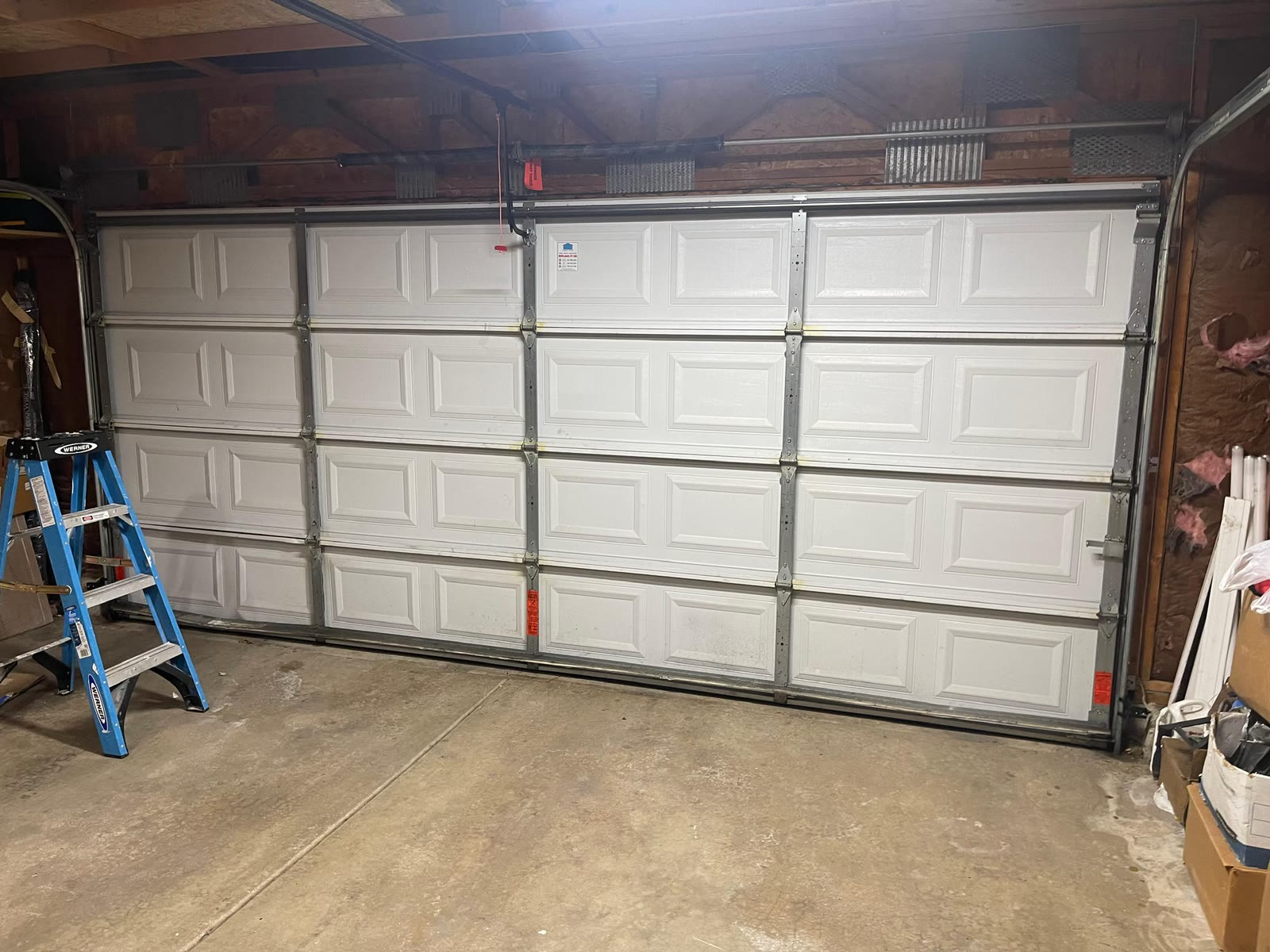
You can tell which springs you have in about five seconds, from the floor, without touching anything. Stand inside the garage with the door closed and look up. If you see one or two springs wrapped around a steel shaft running horizontally above the door opening, those are torsion springs. If instead you see a long spring stretched along each horizontal track, one on the left and one on the right, running back toward the rear of the garage, those are extension springs.
That difference decides how the door lifts, what happens when a spring fails, and how dangerous the failure is. It also decides whether your door needs a part that plenty of older garages on this side of the metroplex are missing, which is a safety containment cable.
What a torsion spring does above the opening
The torsion spring sits on a steel shaft above the door. At install it gets wound a set number of turns, usually around seven and a half on a seven foot door. That twist is stored energy. Cables run from grooved drums on each end of the shaft down to brackets at the bottom corners of the door. Closing the door winds the spring tighter. Opening it lets the spring unwind and pull those cables up.
The design is a trade. The spring's torque cancels the door's weight, which is why a 200 pound door lifts with about ten pounds of hand effort when everything is right. That torque reaches both bottom corners through one shared shaft, so the two sides of the door stay tied together and the door tracks straight. And when a torsion spring breaks it stays on the shaft. You hear a bang like a gunshot and later you find a gap in the coils.
What an extension spring does along the track
An extension spring works by stretching instead of twisting. Each spring anchors to the rear track hanger at one end and connects through a pulley and cable to the bottom bracket at the other. Closing the door stretches the spring and stores energy in it. Opening the door lets it contract and pull, which takes the weight off your arms and off the opener.
The structural difference is that the left spring and the right spring are independent. Nothing ties them together the way a torsion shaft does, so if one side carries more tension the door racks slightly on every cycle and starts binding in the track. There are also more parts in the air: two springs, two pulleys, two lift cables, and the hardware holding all of it. And when an extension spring breaks, nothing contains it unless somebody threaded a cable through it.
The safety cable inside an extension spring is not optional
A safety containment cable is a length of aircraft cable run straight through the middle of the spring and anchored at both ends, usually to the rear track hanger at the back and the spring anchor bracket at the front. It carries no load while the door works. It sits there doing nothing until the day the spring fails.
Here is why it exists. A stretched extension spring holds real energy, and it holds it in a straight line. When the steel cracks, that energy releases along that line and the spring becomes a length of steel traveling at speed across your garage. It goes through drywall. It goes through a windshield. With the cable threaded through it, the broken spring stays strung on that cable and drops.
Extension springs without safety cables are a live hazard
If you look up and see long springs along both horizontal tracks with nothing running through the center of them, that door has no containment on either side. This is not a maintenance item that can wait for something else to break. It is the cheapest safety part on a garage door, and a spring that lets go without one has enough energy to cross the garage and hit whatever is standing there.
Why torsion became the standard
Torsion took over for mechanical reasons, not marketing. One shaft ties both sides together, so the door stays square instead of relying on two independent springs staying matched. Failure is contained on the shaft rather than thrown across the room. Tension is adjustable in measured quarter turns. Cycle ratings above 10,000 are readily available in torsion and hard to get in extension.
That does not make an extension system a defect. A light door with sound springs, good pulleys, and safety cables on both sides is a safe working door, and plenty of them are still running here. What makes an extension setup a problem is missing safety cables, worn pulleys, frayed cables, or a door that has gotten heavier than the springs were ever sized for.
Headroom is why some doors still run extension springs
A standard torsion setup needs roughly twelve inches of headroom above the opening for the shaft, the header bracket, the end bearing plates, and the drums. Low headroom torsion hardware, which uses a doubled track and smaller drums, can get that down to around six inches. Either way you need about three and three quarter inches of side room on each side for the vertical track.
Measure it yourself in a minute. Go from the top of the door opening to the lowest thing in the way, which may be a joist, a light, or ductwork rather than the ceiling. Then measure the flat wall on each side. If headroom is genuinely under six inches, a wall mounted jackshaft operator alongside low headroom hardware is often the only thing that fits.
Converting extension to torsion, and when it is worth it
A conversion is not a parts swap. It replaces the whole counterbalance system: a header bracket and end bearing plates get mounted, a shaft and drums go in, new lift cables get run, and a spring gets sized against the actual weight of your door. The old springs, pulleys, and their cables come off. It costs more than replacing extension springs in kind, so it needs a reason.
- Worth it when the door is heavier than the original springs, which happens after a re-skin, an insulation kit, or a heavier door hung on old hardware
- Worth it when the door racks or binds because the two sides never stay matched
- Worth it when the pulleys, cables, and brackets are worn enough that you are replacing most of the system anyway
- Not worth it on a light single door with sound springs and safety cables already in place
- Not worth it on a door with cracked sections or a rusted bottom, because that money belongs toward the replacement door
The older garages here, and what we usually find in them
Fort Worth has a lot of housing older than the torsion standard. In Fairmount, the Near Southside, the TCU area, and Arlington Heights, most garages are detached and alley served, built in the 1920s through the 1940s, with eight foot single openings, low headers, and very little side room. Extension springs are common there for a simple reason: the headroom for a conventional torsion shaft was never built in.
You also still find one piece tilt up doors on those alley garages and on older shops around Haltom City and White Settlement. Those swing out on pivot hinges and use extension springs on each side. Parts exist but the selection is thin. When the wood swells, drops out of square, and hangs up on the jamb every time, a sectional door on low headroom torsion hardware is usually the more honest answer than another round of repairs.
Humidity is the other local factor. Around Eagle Mountain Lake, Lake Worth, and Lake Granbury, extension springs and their pulleys rust years earlier, and a rust pit on a coil is where the crack starts.
Two things to check tonight, no tools
Identify your system in five seconds by looking up. If it is extension, look for a cable running through the center of each spring and anchored at both ends. If either spring has no cable, that is the next thing to fix on your door.
Never put a hand or a tool on a wound spring
Torsion springs hold their energy whether the door is open or closed, and a broken spring does not mean the system is unloaded. The other spring is still fully wound and the bottom brackets are still under full cable tension, which is why the factory puts a warning label on them. Extension springs are loaded whenever the door is closed. Loosening a set screw, a bracket, or a cable under that tension without the right bars and the right stance is how people end up in an emergency room.
Need this done?
We handle broken spring replacement across Fort Worth and the western metroplex. Call (214) 831-2545 or book online.
Questions
Common questions
How do I tell which springs I have without a ladder?
Stand inside the closed garage and look up. Springs wound around a horizontal steel shaft directly above the door opening are torsion. Long springs stretched along the horizontal tracks on the left and right, running toward the back of the garage, are extension.
Is one type safer than the other?
A properly installed torsion system contains its own failure, since the broken spring stays on the shaft. An extension spring only contains its failure if a safety cable runs through it and is anchored at both ends. With that cable fitted, both systems are safe. Without it, the extension setup is the one that can send steel across the garage.
Can I add safety cables to my extension springs myself?
The cable is simple hardware, but installing it means working around springs that are loaded whenever the door is closed and anchoring to brackets carrying real force. It is a short job for a tech who already has the door secured, and it usually gets done alongside other work. It is not the place to learn on your own door.
Do I have to convert to torsion when my extension springs break?
No. Extension springs in good condition with safety cables are a legitimate system, and replacing them in kind is cheaper on a light door. Conversion earns its cost when the door is heavier than the springs were sized for, when the two sides will not stay balanced, or when most of the pulleys and cables need replacing anyway.
How much headroom does a torsion conversion need?
About twelve inches above the opening for standard hardware, or roughly six inches with a low headroom kit using a doubled track and smaller drums. You also want about three and three quarter inches of side room on each side. Measure to the lowest obstruction, not just the ceiling, since a light or a duct counts.
My garage is a 1930s alley garage with a one piece door. What are my options?
One piece tilt up doors run extension springs on each side and can still be repaired while the wood is sound and the door is square. Once the panel swells, drops, or catches on the jamb every time, thin parts availability and constant adjustment start working against you. A sectional door on low headroom torsion hardware fits most of those openings and runs better in a tight alley.
More advice
Keep reading
What A Spring Job Actually Costs, And Why Quotes Vary So Much
The price of a spring job depends on wire size, door weight, spring count, and whether the door got run after the break. Here is the whole cost structure, including what honestly makes a number go up once the tech is standing in your driveway.
SpringsHow Long Garage Door Springs Last, Counted In Cycles Not Years
One cycle is one trip up and one trip down, and a standard spring is rated around 10,000 of them. Divide by how often your door runs and you have your answer, plus what makes the real number come in lower.
Cables & TracksCables And Drums: The Parts That Fail Second
A garage door cable costs less than a tank of gas and holds up one corner of a two hundred pound door. It almost never fails without warning, and the warning takes two minutes to find.