Springs
What A Spring Job Actually Costs, And Why Quotes Vary So Much
The price of a spring job depends on wire size, door weight, spring count, and whether the door got run after the break. Here is the whole cost structure, including what honestly makes a number go up once the tech is standing in your driveway.
The short version
- A spring price cannot be set until someone knows the wire size, the door weight, the spring count, and whether the door was run after the break.
- Two springs in one visit costs less than one spring twice, because the trip, the setup, and nearly all the labor overlap.
- High cycle springs cost more once and less per year, which only pays on a door running six or more cycles a day.
- Most price increases on site come from running the door after the break, which takes out cables, drive gears, and top sections.
Here is the honest answer first, and it is the one most people do not want. Nobody can tell you what your spring job costs until they know four things: the wire size of the spring, what the door actually weighs, whether the door runs on one spring or two, and whether anyone kept running the door after the spring let go. A number given before those four are known is not a quote. It is a guess with a price tag on it.
So this page explains where the money in a spring job goes, what moves the number up, and what a fair quote should show you line by line. The estimate on site is free.
The four things that set the number
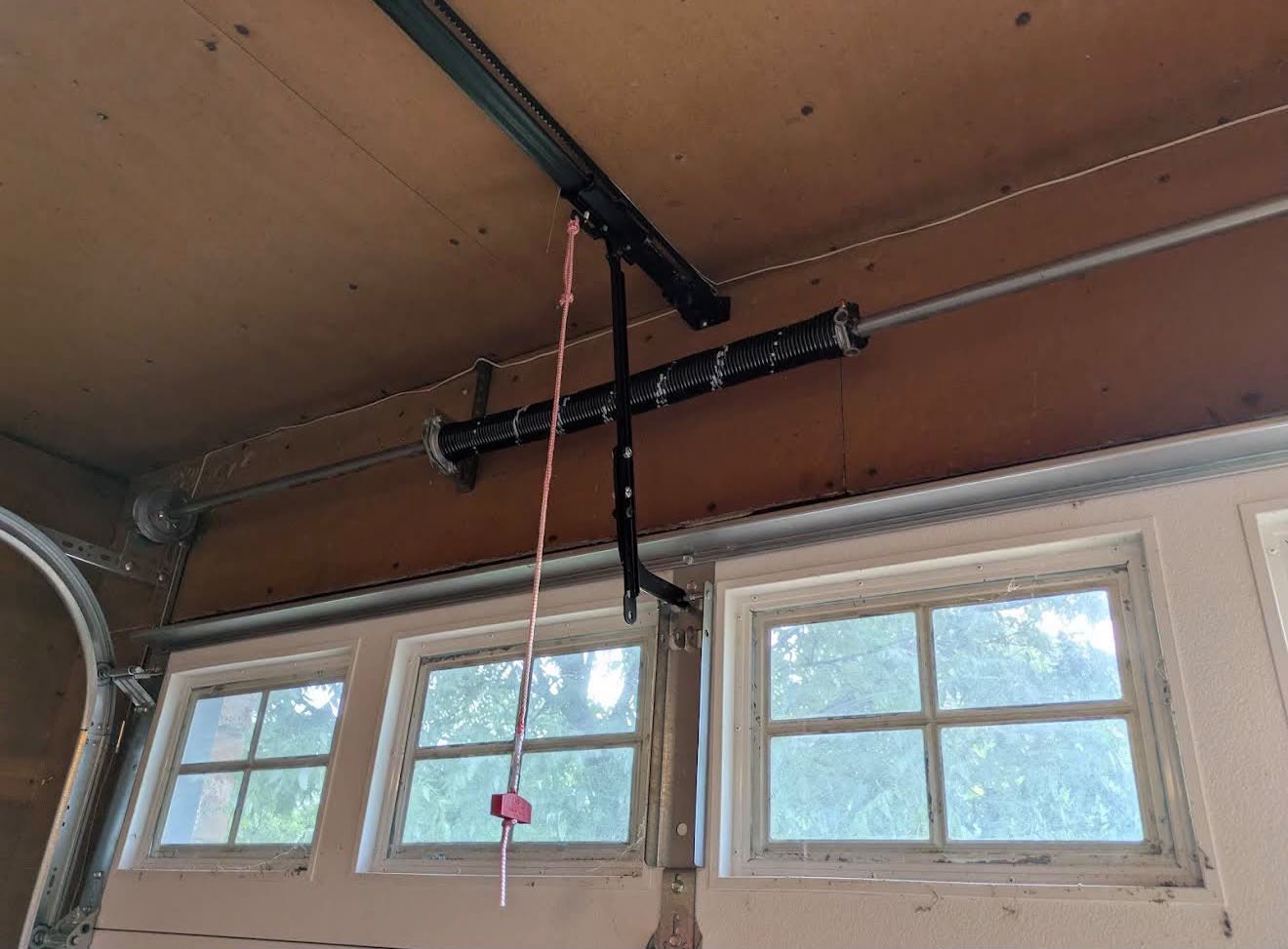
Wire size is the big one. A torsion spring is defined by four measurements: wire diameter, inside diameter, length, and which direction it winds. Thicker wire and greater length means more steel and more torque per turn, and it costs more to buy. A light single door on thin wire and a heavy insulated double on quarter inch wire are not the same purchase.
Door weight is next, because the spring gets sized against the weight, not against the door's size on a chart. A basic uninsulated single can run around 130 pounds. An insulated double with glass in the top section can pass 250. Then the count, one spring or two. Last is whether the door got run after the break, because that decides whether this is a spring job or a spring, cable, and opener job.
Where the money goes: parts, labor, and the part you cannot see
On most residential spring jobs the labor and the trip are the bigger half, not the steel. Spring wire is a commodity. What you are paying for is a tech who knows what your door weighs, picks the right spring for that weight, winds it with proper steel bars, then balances the door so it holds where you leave it instead of drifting.
That last step is what the cheapest quote skips. A door that is close enough still runs. It also chews rollers and burns cycles off the spring you just paid for. Balance is not a finishing touch. It is the job.
- The springs, sized to the measured or calculated weight of your door, not to a generic chart
- Center bearing and end bearings if they are dry, scored, or seized, which is common on a door old enough to break a spring
- Winding, tensioning, and hand balancing the door with the opener disconnected
- A cycle test plus a check of the opener travel and force settings, since the opener has been fighting that door for a while
- Haul away of the old spring, which is scrap steel you should not have to store
Why two springs in one visit costs less than one spring twice
This gets heard as an upsell, so here is the arithmetic instead. The trip is one trip. The ladder goes up once. The shaft, the drums, and the cables get handled once. Almost all of the labor on the second spring overlaps with the labor on the first, so what the second spring adds to the bill is mostly material.
Then there is timing. Both springs went on the same day and have taken the same cycles, so when one reaches the end the other is close behind, often inside a year. Springs are also sized as a matched pair, so a fresh spring working next to a fatigued one puts uneven torque across the shaft and the door never sits right through its travel.
High cycle springs cost more once and less per year
A standard residential spring is rated at about 10,000 cycles, and one cycle is one trip up and one trip down. A high cycle spring uses thicker wire and more length, carries a rating of 20,000 or 50,000, and costs more up front. The gap is not large next to a whole second spring job with its own trip charge.
Whether it pays comes down to how often the door runs. At six cycles a day, about 2,190 a year, a standard spring is a four to five year part and high cycle turns that into a decade. At two cycles a day the standard spring already lasts around fourteen years, and stretching that past the remaining life of the door is money doing nothing.
Why an emergency or after hours call costs more
During the day a tech is on a route, three or four stops ordered so the driving between them is short. At nine at night he is not on a route. He is in your driveway instead of the three jobs he would run in the morning, and the truck, the fuel, and the hour all land on one ticket instead of four. That is the whole reason the rate is higher. It is scheduling, not opportunism.
So it is worth paying when the door is stuck open, when a car is trapped and you leave before dawn, or when something is pinned under the door. It is not worth paying when the door is closed, the house is locked, and the only cost of waiting is inconvenience. We will say so on the phone.
North Texas produces one predictable version of this. The first hard freeze of the season sets off a wave of spring breaks across Tarrant and Parker County inside the same two or three mornings. Cold does not wear a spring out. It makes already fatigued steel less forgiving at the moment of highest stress, which is the door sitting closed with the spring fully wound. Everybody's door goes on the same morning, which is the morning every truck is booked. If your door is on original springs and the house is fifteen years old, the week before a front is a cheaper week than the morning after one.
What honestly makes a quote go up once the tech arrives
A number can move. It should not surprise you, and you should hear about it before any wrench turns. These are the real reasons, and there are not many.
- Cables shredded at the drum or at the bottom bracket, almost always because the door got run a few more times after the bang
- A stripped plastic drive gear in the opener, from the motor trying to lift a door the springs were no longer holding
- A bent or cracked top section where the opener arm attaches, which is the weakest point when the opener pulls on dead weight
- A seized center bearing or a worn end bearing plate, which will grind a brand new spring if it goes back together as is
- An unusual wire size, a very heavy custom door, or a high cycle setup that has to be ordered instead of pulled off the truck
Four of those five trace back to one cause, which is running the door after it broke. One or two presses before you understood what happened is almost always harmless. Twenty is a different bill.
What a fair quote itemizes
You cannot compare two prices that are written differently. Ask for the quote in parts, and ask these five in this order.
- How many springs is this price for, and does it include both
- What is the cycle rating of the spring going on my door, 10,000 or higher
- Are bearings, cables, or a bottom bracket included, or added if they turn out to be needed
- Does the price include hauling the old parts away
- Does the price change if you find something else, and will you tell me before you do that work
The fourth one is the tell. A company that will not put a cycle rating on the spring it is installing has not thought about the spring.
The estimate on site is free
We do not charge to come look and tell you what broke. What we will not do is hand you a firm number over the phone for a symptom with four possible causes. That number is either padded for the worst case or it is a low number that climbs once the truck is in the driveway.
Do not run the door, and do not wind the spring yourself
A broken spring means a door that can weigh over 200 pounds with nothing counterbalancing it. Every press of the button after that puts the whole weight on the opener, the cables, and the top panel. Do not attempt the winding either. The other spring is still fully wound, the bottom brackets are still under full cable tension, and a winding bar coming out of a cone under that torque is how people lose fingers and teeth.
Need this done?
We handle broken spring replacement across Fort Worth and the western metroplex. Call (214) 831-2545 or book online.
Questions
Common questions
Why will you not quote a spring over the phone?
Because the price depends on wire size, door weight, and spring count, and none of those can be read over a phone call. A phone number for a spring job is either padded to cover the heaviest door we might find or it is a low number designed to get the truck there. The estimate on site is free, so there is no cost to finding out the real one.
Is it cheaper to replace just the broken spring?
On that one visit, slightly. Over the next year, no. The second spring has taken the same number of cycles and is close behind, so you pay a second trip charge and a second setup for the same job. A new spring next to a fatigued one also puts uneven torque across the shaft, so the door never balances properly.
Are high cycle springs worth the extra money?
It depends entirely on how often the door runs. At six cycles a day a standard spring is a four to five year part and high cycle stretches that to a decade, which is clearly worth it. At two cycles a day the standard spring already lasts around fourteen years and the upgrade buys time you will probably never use.
The door still opens with one spring broken. Can I keep using it?
No. The remaining spring is now carrying a load it was never sized for, so it fatigues fast, and the opener is lifting weight it cannot handle. What usually gives out next is the drive gear, the cables, or the top panel where the opener arm bolts on. That turns a one hour spring job into a much longer and more expensive one.
Why do so many springs break on the same cold morning?
The spring is at its highest stress when the door is closed and the spring is fully wound, and cold steel is less forgiving of a crack that fatigue already started. So the first hard freeze acts as a trigger for springs that were near the end anyway. The cold picked the morning. It did not shorten the life.
What should be included besides the spring itself?
Winding and tensioning, hand balancing the door with the opener disconnected, a cycle test, a check of the opener travel and force settings, and haul away of the old spring. Bearings and cables get quoted separately because they may or may not need replacing. Anything not on the written quote should be discussed before the work happens, not after.
More advice
Keep reading
How Long Garage Door Springs Last, Counted In Cycles Not Years
One cycle is one trip up and one trip down, and a standard spring is rated around 10,000 of them. Divide by how often your door runs and you have your answer, plus what makes the real number come in lower.
SpringsTorsion Springs Or Extension Springs, And Why It Matters On Your Door
Look up: springs on a shaft above the opening are torsion, long springs along the side tracks are extension. Here is how each one lifts your door, what fails, and why one of them needs a safety cable it may not have.
OpenersWhy Garage Door Openers Die Early In North Texas
An opener that quits is usually the second thing that broke, not the first. Here is the force path, the heat and surge damage specific to our summers, and the honest line between repair and replace.